Liquid Ring Vacuum Pump Seal Water Temperature: Why Vacuum Drops as Water Heats Up
Learn how seal water temperature affects liquid ring vacuum performance, what to measure, and what to check before replacing a pump.
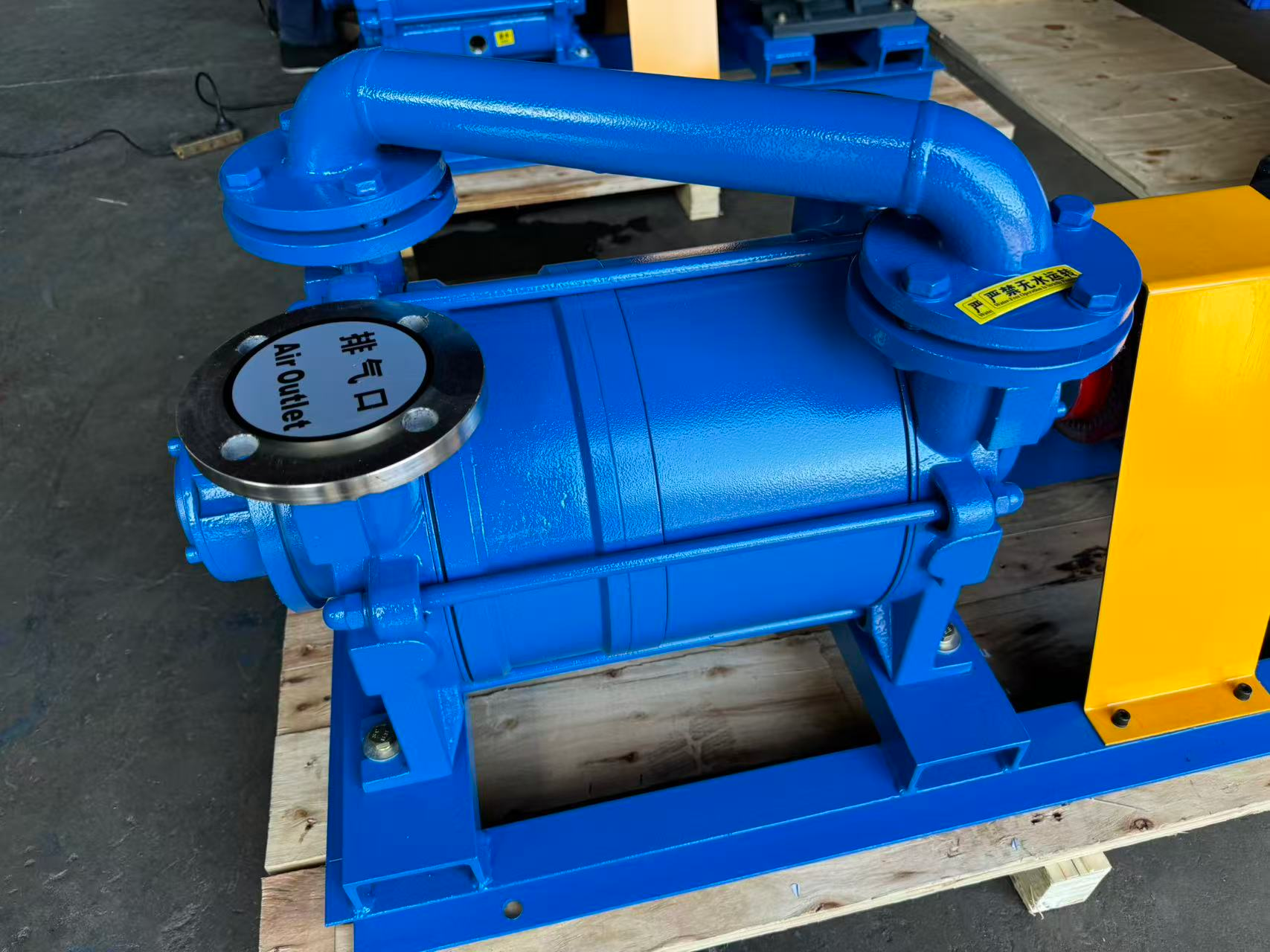
Warm seal water can reduce the vacuum performance of a liquid ring pump. As water temperature rises, its vapor pressure increases. This matters especially when the process requires low absolute pressure. Before assuming that a pump is worn or undersized, check the water entering it and compare the operating conditions with the pump's specified performance curve.
This guide focuses on water used as the operating liquid. Other liquids, or water contaminated by the process, require a separate assessment.
Why seal water temperature matters
Water in a liquid ring pump forms part of the pumping mechanism. Its properties therefore affect performance, rather than serving only as an external cooling utility.
Water vapor pressure rises with temperature. When local pressure inside the pump falls sufficiently, some of the liquid can vaporize. Bubbles may then collapse as they enter regions of higher pressure. This is cavitation, which can damage internal surfaces and disturb operation. High liquid temperature and operation near the pump's low-pressure limit are relevant risk factors. Atlas Copco explains this pressure-temperature relationship.
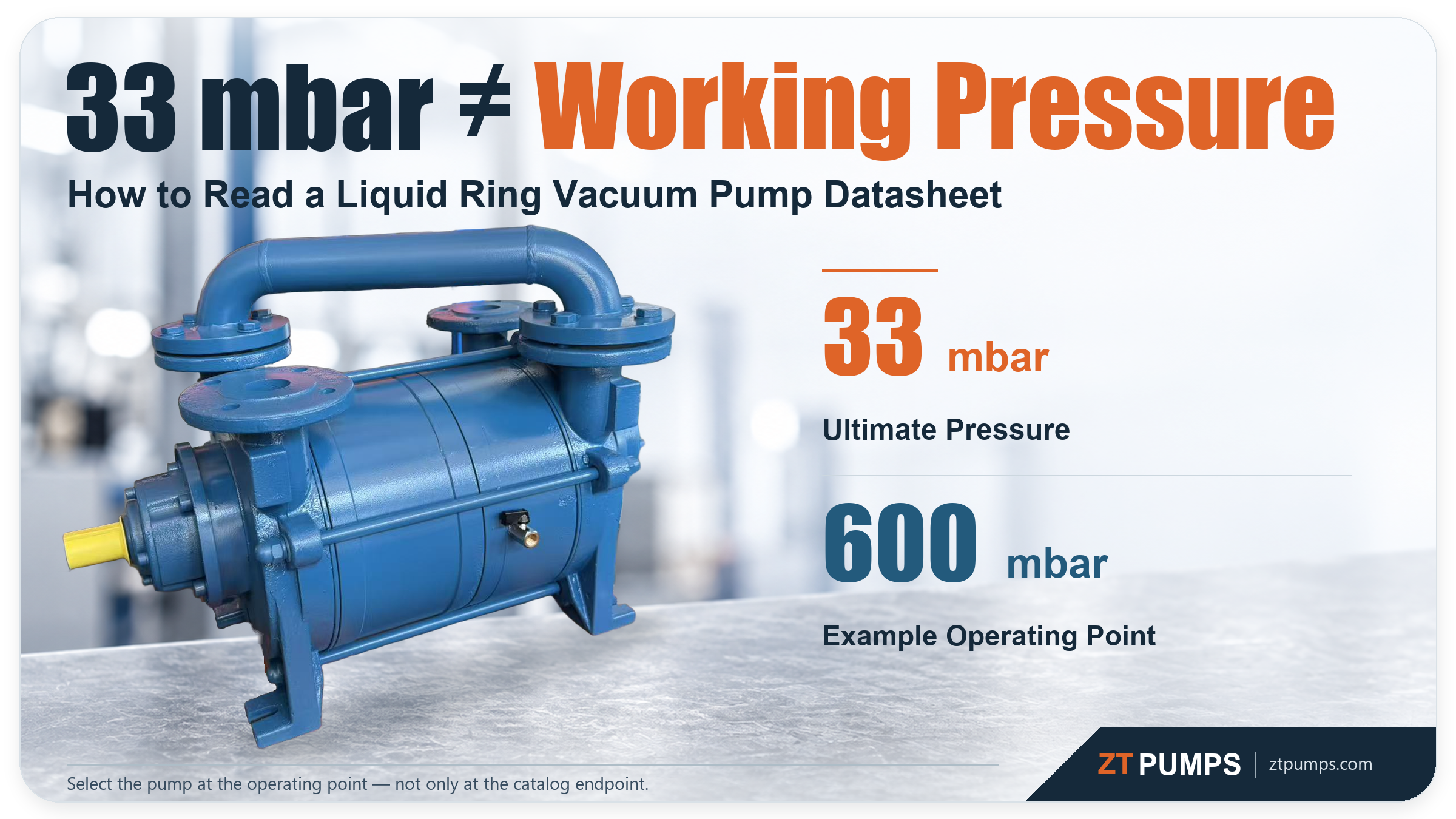
A catalog's ultimate-pressure figure is not a promise of the same performance at every water temperature or gas load. For the distinction, read our guide to ultimate pressure versus working pressure.
What to record before changing anything
Take readings under a clearly identified process condition, then compare them with a known normal condition. A useful record includes:
| Reading | Record it clearly |
|---|---|
| Pump inlet pressure | Value, unit, gauge type and measurement location; state whether it is absolute or gauge pressure |
| Seal water entering the pump | Temperature and measured flow |
| Liquid leaving the separator | Temperature and measurement location |
| Process gas entering the pump | Temperature and current process load |
| Drive condition | Pump speed and motor current |
| Timing | Time after startup, date and relevant cooling-water conditions |
NASH recommends tracking operating temperatures alongside vacuum and motor load, using normal operation as a baseline. Its guidance also identifies restricted liquid supply and increased process heat as possible reasons for an unusual temperature rise. See NASH's temperature-monitoring guidance.
Keep the measuring locations consistent. A reading from a storage tank is not a substitute for identifying the temperature of the liquid actually entering the pump.
Check water supply and cooling before replacing the pump
Use the symptoms to organize the investigation, rather than treating any one symptom as proof of a failed component.
If the pump becomes unusually hot, check the liquid supply. Restricted passages or inadequate supply pressure can reduce seal water flow. Hot process gas can also raise pump temperature even when flow is adequate. NASH's hot-pump guidance discusses both possibilities.
If a recirculating system gradually gets hotter, review its heat removal. The separator, heat exchanger, recirculation arrangement and controls should be considered together. Correctly designed cooling and liquid circulation help maintain stable operation; changing only the pump may leave the underlying system problem unresolved. Atlas Copco's system guidance describes these connections.
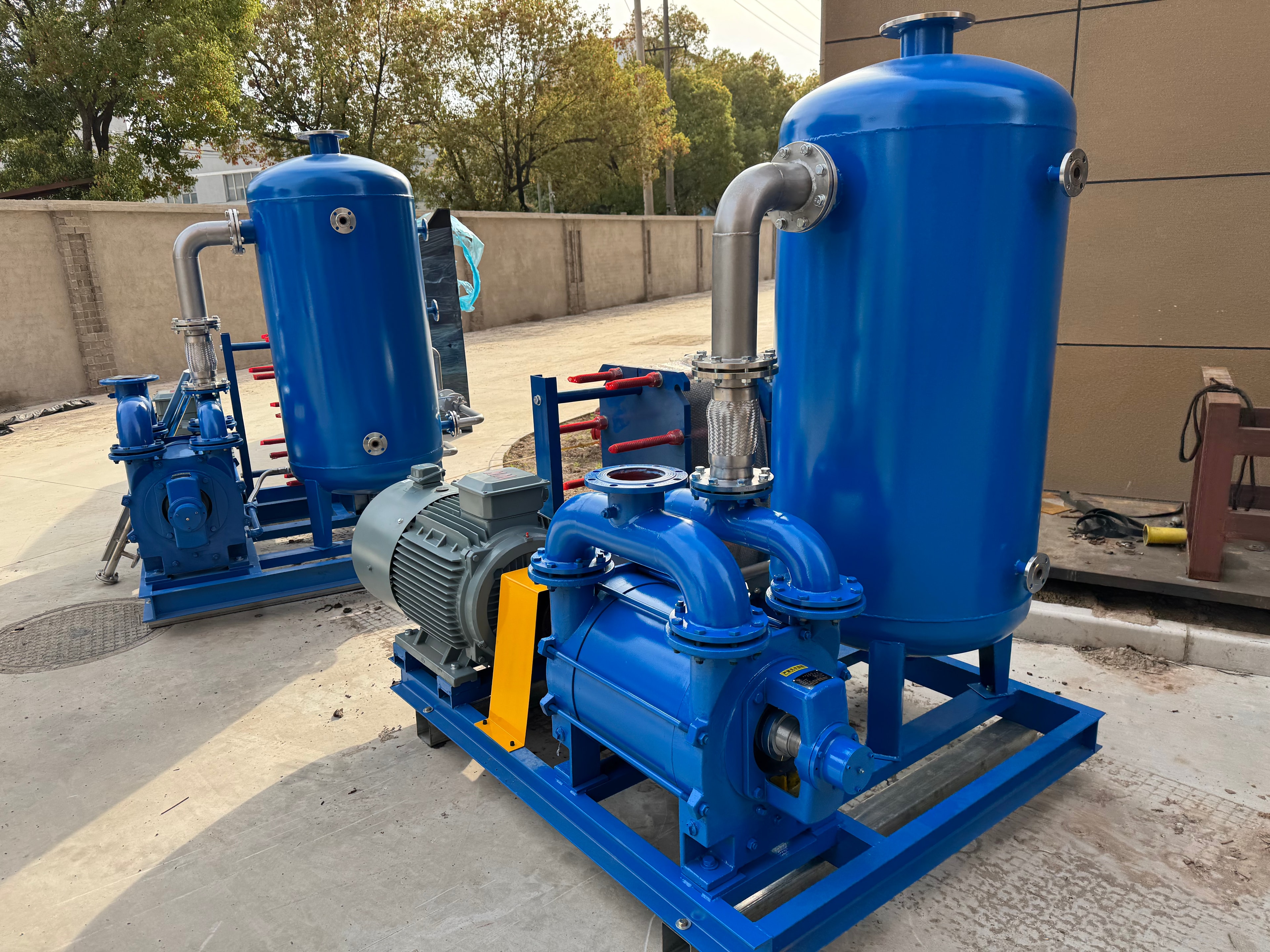
Liquid ring vacuum system with a gas-liquid separator and plate heat exchanger. Assess the liquid circuit and heat removal together.
If crackling noise appears at low pressure, investigate possible cavitation. Sound alone is not a complete diagnosis. Check the permitted operating range and the specified protection arrangement. Do not improvise a test by closing the suction valve: the Busch DOLPHIN LR manual, section 7.1 specifically cautions against using inlet throttling or closure to control vacuum on those pumps. Follow the instructions for your own equipment.
Questions to ask when selecting a liquid ring pump
Supply the actual operating conditions with an inquiry, rather than requesting a pump by ultimate pressure alone:
- What absolute pressure must the process maintain?
- What gas flow is required at that pressure, and on what temperature and pressure basis is that flow stated?
- What gas or vapor is being handled?
- What seal water temperature and flow are available under the warmest expected conditions?
- Is the liquid once-through, partly recirculated or fully recirculated?
- What are the discharge conditions and available cooling utilities?
Seal-liquid properties, the liquid circuit and discharge conditions all belong in the selection assessment. NASH's liquid ring selection guidance identifies these as application inputs. Ask for the relevant performance curve and its reference conditions, then request an assessment for your actual duty.
Frequently asked questions
What is the correct seal water temperature?
There is no single setting suitable for every pump and process. Use the limits and reference conditions for the selected model and system. Do not copy another manufacturer's model-specific temperature limit into a different pump's operating procedure.
Will colder water always solve poor vacuum?
Lower water temperature reduces water vapor pressure, but that does not establish the cause of every vacuum problem. Compare temperature, flow and process conditions before deciding on a remedy. The pump's permitted operating range still applies.
Should I increase water flow until vacuum improves?
Use the specified flow range and adjustment procedure. An open valve does not establish the actual flow, and an arbitrary increase is not a substitute for measurements or the equipment instructions.
Discuss your operating conditions
Explore our liquid ring vacuum pump range, or send Zhongtian Pumps your application details. Include the pump model, required pressure, gas flow and measured water conditions so the discussion can start from your operating duty.
Explore Topics
Written by
Zhongtian Pumps
Zhongtian Pumps